Fashion Impress: Dress Up Star
- 3.8
- Rating
- 10.00M
- Installs
- Free
- Price

 Analysis by App-foxy
I went into Fashion Impress: Dress Up Star expecting a quick outfit-matching game, and that is largely what it delivers: short fashion challenges, a runway presentation, and a steady stream of decisions about how a look should come together. It is a casual game from UltraPub, free to download, and its basic appeal is easy to understand within the first few minutes. You choose clothing and styling details, present the result, and move on to the next challenge.
What makes it more interesting than a simple dress-up toy is the way it frames each choice as part of a public performance. The runway gives every outfit a small moment of judgement, so I was not only asking whether I liked a dress or hairstyle, but whether the whole look suited the theme I was trying to express. That extra layer gives the game its playable mood without turning it into a complicated fashion simulator.
The game is suitable for Everyone, and it runs on Android devices using version 7.0 or later. It launched on January 8, 2025, and the current version is 1.4.7. Its audience is already substantial, with over ten million installs, while the average rating sits at 3.8 from around fifteen thousand ratings and about two hundred forty written reviews. Those figures suggest a game with broad reach but also a mixed response, which matches my experience: the presentation is inviting, although the simple structure will not satisfy every kind of player.
You May Also Like

 Blood Strike: 2.5 Anniversary
Blood Strike’s Loadouts Turn Every Drop Into a Tactical Gamble
A close look at Blood Strike’s custom loadouts: how fast access to signature weapons reshapes its battle royale rhythm, rewards preparation, and narrows the gap between fights.

 Pandora - Music & Podcasts
Pandora’s Music Is Easy to Start, but Harder to Recover
Pandora’s strength is its low-effort path from a seed to a station. Its weak spot is how much confidence it asks you to place in connection, setup, and quiet recovery.

 8 Ball Pool
 Is Built on Rivalries, Rematches, and Routine
A close look at the rivalries, rematches, shared routines, and unanswered safety questions that turn a quick pool match into a persistent mobile community.

 Samsung Music
’s Quiet Strength Is Playing What You Already Own
Its reach comes less from spectacle than from dependable access to a personal library. That simplicity is both the app’s strongest retention engine and its ceiling.

 AccuWeather: Weather Radar
AccuWeather Review: A Quick, Clear Forecast for Everyday Decisions
For everyday plans, the best forecast is the one you can understand quickly. AccuWeather makes rain timing, radar, and local conditions easy to act on, with a few trade-offs.

 Hill Climb Racing
Why Hill Climb Racing Still Turns Crashes Into One More Run
A tiny car, a bumpy hill and one more upgrade: Hill Climb Racing keeps resurfacing because its simple chaos makes every near-miss feel personal.
More From Our News Desk



How the runway turns styling into a playable mood
I found the runway format works best when I treat each round as a small creative prompt, not a test of fashion expertise. Choosing one visual idea first—then letting the rest of the outfit support it—makes the decisions feel more intentional and the result easier to read. That approach also brings out the game’s central appeal: quick styling with a little sense of occasion.
A bright first impression built around quick decisions
The opening impression is deliberately immediate. Fashion Impress does not ask me to learn a large rulebook before I can enjoy it. The central loop is recognizable: prepare a character for a fashion situation, make choices from the available wardrobe, and see how the finished appearance performs in a catwalk battle. That accessibility is one of its strongest qualities, especially when I want something I can play in short sessions rather than a game that demands a long uninterrupted commitment.
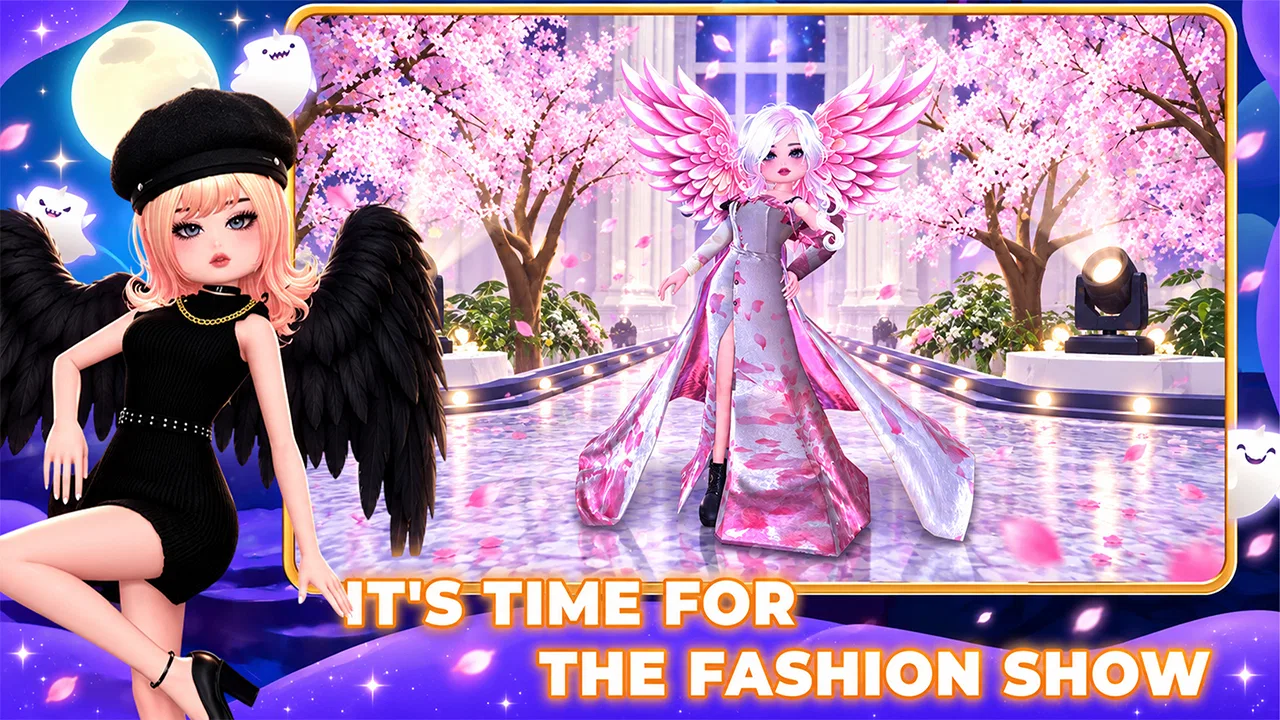
The visual direction supports that first impression with a polished, playful fashion-show identity. Characters and outfits are presented as the main attraction, while the runway setting gives each round a sense of occasion. Even when the actual decision is small, the presentation encourages me to treat it as a complete look rather than an isolated item. A top, hairstyle, accessory, or pair of shoes feels more useful when I think about the relationship between them.
I also noticed that the game works best when I accept its pace instead of trying to turn every round into a detailed design project. The choices arrive quickly, and the satisfaction comes from recognizing a theme and responding with confidence. If I hesitate over every item, the process can feel more mechanical. If I make a fast visual judgement, the runway sequence becomes a pleasant payoff.
That makes it a good fit for everyday gaps in the day. I can imagine playing a few rounds while waiting for an appointment or taking a short break from work. It does not require the emotional investment of a story-heavy role-playing game, and it is more active than simply scrolling through fashion images. The trade-off is that the same convenience can make the experience feel lightweight when I want deeper progression or more control over the final design.
The fashion world communicates through visual contrast
The setting is not built around a large fictional universe with extensive lore. Instead, its world language comes through the runway, the characters, and the contrast between different styling choices. The game communicates its identity visually: glamorous presentation, clear silhouettes, and the anticipation of seeing an outfit judged in public. I found that this approach keeps the focus where it belongs, on appearance and presentation rather than on a distracting narrative.
That simplicity has an advantage. I do not need to remember character histories or understand a complicated setting before making a decision. The runway itself explains the stakes. A look is being prepared for an audience, and the visual result is the main form of communication. For players who enjoy fashion games because of color, shape, and coordination, this directness is more useful than a story that interrupts the styling process.
At the same time, the limited world-building means the atmosphere depends heavily on the quality and variety of the styling situations. When the prompt feels distinct, I naturally start thinking in terms of mood and character. When the choices feel too similar, the runway can become a repeated backdrop for the same basic activity. This is an important distinction for potential players: the game offers a fashion-show fantasy, but it is not trying to be a full fashion career simulation.
My most useful approach was to choose a visual anchor first. I would decide whether the outfit should be elegant, playful, dramatic, or restrained, then select the remaining pieces around that decision. This prevented the common mistake of picking the most eye-catching item in every category and ending up with a look that had no clear identity. The game does not need a formal design tutorial to reward this kind of thinking; the runway presentation makes the result easy to judge for myself.
Sound and rhythm keep the short rounds moving
The audio and pacing work together to make the game feel like a compact stage performance. The rhythm is not slow or contemplative. It moves from selection to presentation without asking me to spend too much time in menus, which helps maintain the casual tone. The runway moment acts as a punctuation mark after the preparation phase, giving the round a beginning, middle, and end even when the underlying mechanics remain simple.
I think this pacing is especially important because dress-up games can easily become static. If I were only arranging items on a character without a sense of presentation, the activity would feel closer to browsing a wardrobe. Here, the catwalk gives the outfit a destination. The look is not merely assembled; it is shown. That small change makes the same clothing decisions feel more purposeful.
The sound design is best understood as support rather than the main attraction. It helps reinforce the upbeat fashion-show mood, but I would not choose this game primarily for its audio. Players who normally keep their phone muted will still understand the core loop, because the visual staging carries most of the meaning. Players who want a rich musical identity or a dramatic soundtrack may find the presentation less memorable than the artwork.
There is also a practical pacing trade-off. Fast rounds make the game approachable, but they leave less room for careful experimentation. I sometimes wanted to compare two complete looks before committing, especially when the available items could support different styles. A useful habit is to make one deliberate pass through the categories, identify the strongest overall combination, and avoid repeatedly reopening choices without a clear reason. That keeps the experience relaxing instead of turning a short session into indecision.
Where the mechanics fit the casual category
Fashion Impress succeeds most clearly as a casual game because its mechanical demand is light but not nonexistent. I still need to make choices, notice visual relationships, and respond to the fashion context. However, I am not managing a complicated economy, learning difficult controls, or planning long tactical sequences. The main challenge is aesthetic judgement under a simple time-and-choice rhythm.
The catwalk battle format gives the game a competitive flavour without requiring the intensity of a traditional action game. The competition is expressed through the finished look and its presentation. That makes the game approachable for someone who likes the idea of competition but does not want reflex-based combat or complex strategy. It also explains why the game may appeal to younger players and to adults looking for a low-pressure diversion.
Compared with a conventional dress-up app, the runway structure gives my decisions more consequence. In a typical wardrobe sandbox, I can create an outfit and stop there. Here, the outfit is prepared for a specific public moment, so coordination matters more. Compared with a deeper fashion-management game, though, the experience is much less demanding. There is no need to plan a long-term collection or manage a detailed brand identity. Players who want freedom above all else may prefer a pure avatar-customization app, while players who want quick judgement and presentation will likely find this format more engaging.
The game is also easier to recommend than many competitive mobile titles because it does not depend on fast reactions. Someone who enjoys visual puzzles, makeover content, or casual character customization can understand the appeal quickly. I would be more cautious recommending it to a player who needs a strong narrative, extensive character development, or a complex system of unlocks. The runway is the destination, and the game does not disguise that simplicity.
Practical expectations about cost and device support
The game is free, which makes it easy to try without committing money at the start. It includes optional in-app purchases ranging from $0.99 to $5.99 per item. I would treat those purchases as a convenience rather than part of the reason to install it. The core question is whether the styling loop remains enjoyable when I play within the available options, because a casual fashion game loses some of its charm if progress feels dependent on buying every attractive item.
For that reason, I recommend spending time learning the visual logic of the game before making any purchase. First decide whether you enjoy building looks, responding to the runway situation, and watching the presentation. If those moments already feel satisfying, optional items may add variety. If the basic rounds feel repetitive, paying for more wardrobe content is unlikely to solve the underlying issue.
Android compatibility is broad enough for many older devices, since the minimum requirement is Android 7.0. Still, the actual comfort of play will depend on the phone or tablet being used. Fashion-focused games benefit from a clear screen because small differences in color, shape, and accessories matter. On a cramped or older display, some of the visual appeal may be harder to appreciate, even if the game technically runs.
The current version, 1.4.7, is the one I would look for when installing, since keeping the app updated is the sensible way to receive the intended current experience. I would also remember that the game is designed for short, repeatable sessions rather than a single long campaign. That expectation makes its modest scale feel intentional instead of disappointing.
Small strategies that make the styling loop better
My first practical tip is to build around one dominant idea. If the outfit has a statement piece, let the other selections support it instead of competing for attention. This is more reliable than choosing the most elaborate option in every category. A coherent outfit often feels more convincing than one packed with unrelated highlights.
Second, I found it helpful to judge the complete silhouette before worrying about individual details. Hair, clothing shape, and footwear establish the overall impression from a distance. Accessories can refine that impression, but they rarely rescue a combination whose proportions already feel confused. Looking at the character as a whole also makes the runway presentation easier to read.
Third, I would use the catwalk as feedback rather than treating it only as a reward animation. The presentation reveals whether the outfit feels balanced and whether the styling choices seem to belong together. If a round does not look convincing, I would change the relationship between the major pieces on the next attempt instead of simply replacing one small accessory. That approach turns a very simple game into a modest visual exercise.
A fourth insight is about session length. The game is more enjoyable when I stop after a few satisfying rounds rather than forcing a long marathon. Because the central activity is compact, repetition becomes noticeable sooner than it would in a story-driven title. Short sessions preserve the sense of a fashion-show interlude and make it easier to return later without feeling that I have exhausted the idea.
Finally, I would not assume that the most dramatic look is always the best response. A runway outfit needs a readable direction. Sometimes a restrained combination communicates its theme more clearly than a collection of flashy items. The game gives enough visual information for players to develop that instinct, even though it does not present itself as a formal styling lesson.
Who will enjoy it, and who should skip it
I would recommend this game to players who like makeover challenges, character styling, and quick competitive presentation. It is particularly suitable for someone who wants a casual fashion activity that can be picked up without studying complicated systems. It also works for players who enjoy comparing visual choices and finding satisfaction in a polished final appearance rather than chasing high mechanical difficulty.
It may also suit families looking for an accessible game with an Everyone age rating. The controls and concept are easy to explain, and the fashion-show framing gives younger players an immediate goal. Adults can enjoy it too, especially when they treat each round as a small creative prompt rather than expecting a complete simulation of the fashion industry.
I would skip it if my priority were deep customization, a substantial story, or a long-term management system. I would also look elsewhere if I disliked repeated short rounds or if I wanted a game where skill comes from rapid input and complex strategy. A pure dress-up sandbox may be better for unrestricted experimentation, while a narrative game may be better for emotional investment. This title sits between those options: more directed than a wardrobe toy, less layered than a full simulation.
My final view of the atmosphere and the loop
Fashion Impress: Dress Up Star creates a coherent mood by connecting its art direction, runway setting, sound support, and brisk pacing to one clear idea: styling a character for a public fashion moment. The mechanics remain simple, but the presentation gives those mechanics a reason to exist. I am not merely changing clothes; I am preparing a look to be seen, and that small sense of performance is what keeps the game from feeling completely static.
Its limitations are equally clear. The compact structure can become repetitive, the competitive framing will not replace a deeper progression system, and optional purchases mean players should decide carefully how much extra content they really want. The mixed average rating reflects a reasonable divide between people who enjoy the focused loop and people who expect more variety or depth from a fashion game.
My recommendation is straightforward: try it if you want a free, approachable casual game built around styling choices and runway presentation. Give it a few short sessions before deciding whether its rhythm suits you. The best reason to keep playing is the pleasure of making a coherent look and seeing it presented, not the promise of a complex fashion career. For that specific mood, UltraPub has created an inviting experience; for anything broader, a more expansive alternative will probably be the better choice.
FAQs for Fashion Impress: Dress Up Star
01What is Fashion Impress: Dress Up Star?
Fashion Impress: Dress Up Star is a fashion and dress-up game where you create outfits for different themes, occasions, and style challenges. You can select clothing, hairstyles, shoes, accessories, and other visual details to build a complete look. The game is mainly designed for casual play and creative experimentation, allowing players to enjoy fashion competitions without needing advanced gaming skills.
02How do you play Fashion Impress: Dress Up Star?
Gameplay is based on choosing an appropriate outfit for each fashion prompt. After entering a challenge, you browse the available wardrobe items and combine them to match the requested theme, such as casual, elegant, glamorous, or seasonal fashion. Once the look is complete, it may be evaluated or compared with other designs. Progress generally unlocks more clothing and customization options.
03Is Fashion Impress: Dress Up Star free to download and play?
Fashion Impress: Dress Up Star can generally be downloaded without an upfront purchase, but the game may include optional in-app purchases. These purchases can provide premium clothing, currency, special items, or faster access to certain content. Depending on the version and device, advertisements may also appear during play. It is a good idea to review the store listing and purchase settings before downloading.
04Does Fashion Impress: Dress Up Star require an internet connection?
Some parts of Fashion Impress: Dress Up Star may work without a constant internet connection, particularly basic outfit creation and previously available content. However, online features, advertisements, reward systems, updates, cloud-related functions, or new challenges may require connectivity. Offline availability can vary between Android and iOS versions, so players should test the game after installation rather than assuming every feature works without internet access.
05Is Fashion Impress: Dress Up Star suitable for children?
The game is generally accessible to players who enjoy fashion customization and simple creative challenges, including younger audiences. Nevertheless, parents should check the age rating, privacy information, advertising practices, and in-app purchase options for the specific version available in their country. If children use the app, enabling parental controls and requiring approval for purchases can help prevent accidental spending and limit exposure to unsuitable advertisements.
Pros
- Large wardrobe with many outfits
- accessories
- hairstyles
- and makeup options.
- Simple controls make creating looks easy for casual players.
- Helpful for exploring color combinations and personal fashion styles.
- Regular challenges give players a reason to return and create new looks.
- Bright visuals and polished character designs suit the dress-up genre.
Cons
- Some premium items may require purchases or extended gameplay to unlock.
- Repeated challenges can feel similar after extended play sessions.
- Certain ads may interrupt progress or appear when claiming rewards.
- The app may use considerable storage because of its visual content.
- Players seeking action or strategy may find the gameplay too limited.

Fashion Impress: Dress Up Star
Gallery